


When it comes to hunting, outdoorsmen are always looking for ways to optimize their viewing capability once the sun goes down. Infrared (IR) illuminators are devices made to accompany your night vision device to provide further illumination on those darker nights when night vision devices can’t produce as clear images.
Topping our review of infrared illuminators is the
Contents
The Top Night Vision Infrared Illuminator Reviewed
| PRODUCT NAME | ATN SUPER NOVA IR 850NM | EVOLVA FUTURE TECH. T67 | ATN PRO LONG RANGE | PULSAR 940 IR FLASHLIGHT |
|---|---|---|---|---|
| Best for | Best option overall | Best Infrared Laser Illuminator | Best 850nm option | Best 940nm option |
| Image | 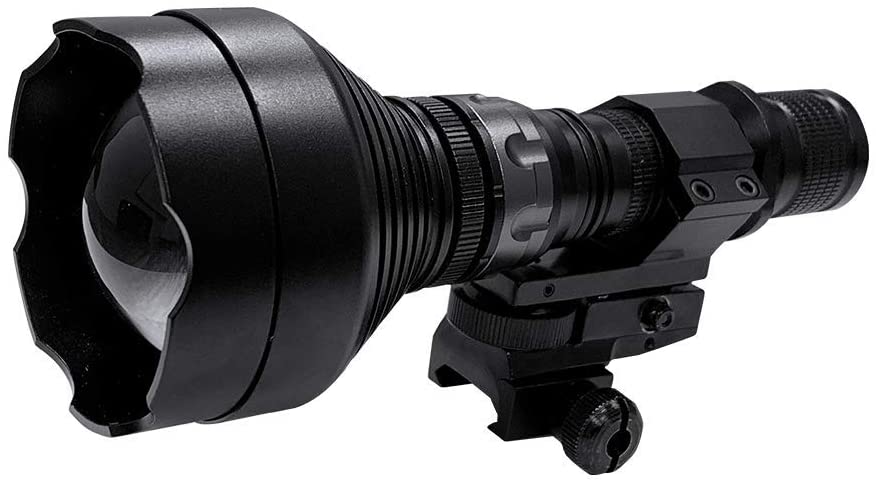 |  |  | 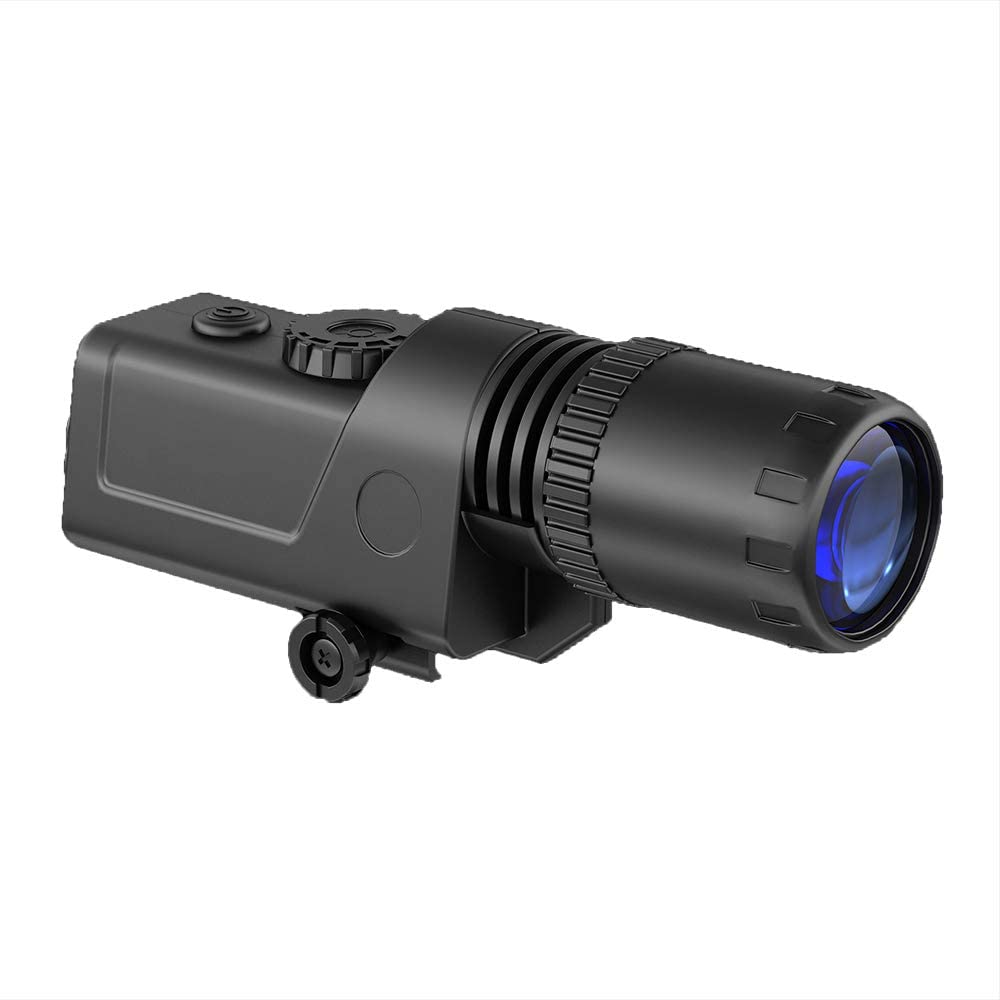 |
| Wavelength | 850nm | 850nm | 850nm | 940nm |
| Weather Resistance Rating | IPX8 | Only splashproof | IPX8 | IPX6 |
| Weight | 15oz | 12oz | 3.2oz | 6.7oz |
| Battery Life | 3.5 hrs (at100%) | N/A | N/A | 2hrs |
| See on Amazon | See on Amazon | See on Amazon | See on Amazon |
Find the right Night Vision Infrared Illuminator for You
#1 Best Overall - ATM SuperNova
The
Pros
- Aircraft-grade aluminum
- 4-stage output
- 400-450 yard illumination rage
- Waterproof
Cons
- Rail mount only
#2 Best Infrared Laser Illuminator - Evolva Future Technology T67
The Evolva Future Technology T67 is a great night vision accessory to consider if you are looking for a quality device that features as a floodlight as well as a precise spotlight. The Evolva T67’s floodlight gives users 200 meters of spacious viewing but can be focused down to a spot to illuminate specific areas up to 100 meters.
With an aspherical lens, the T67 allows you to adjust the IR light for close flooding range to a powerful precise beam. Simply giving you a 3-mode system – low, medium, and high and charged by two 18650 Li-Ion batteries. Evolva constructed the T67’s tube to be 30mm, meaning you can use 30mm adapters to mount this infrared illuminator on your rifle.
Pros
- Spotlight and floodlight
- Aircraft quality aluminum housing
- 3-mode system
Cons
- Only splashproof
#3 Best long-range option - ATN SuperNova
Along with its other defining attributes that made the
Pros
- Aircraft-grade aluminum
- 4-stage output
- 400-450 yard illumination rage
- Waterproof
Cons
- Rail mount only
#4 Best 850nm option - ATN Pro Long Range
The
Pros
- 300-meter illumination range
- 3-stage system
- 3.2oz
- IPX8 water resistance
- Made from aircraft-grade aluminum
Cons
- Powered by non-rechargeable batteries
#5 Best 940nm option - Pulsar 940 IR Flashlight
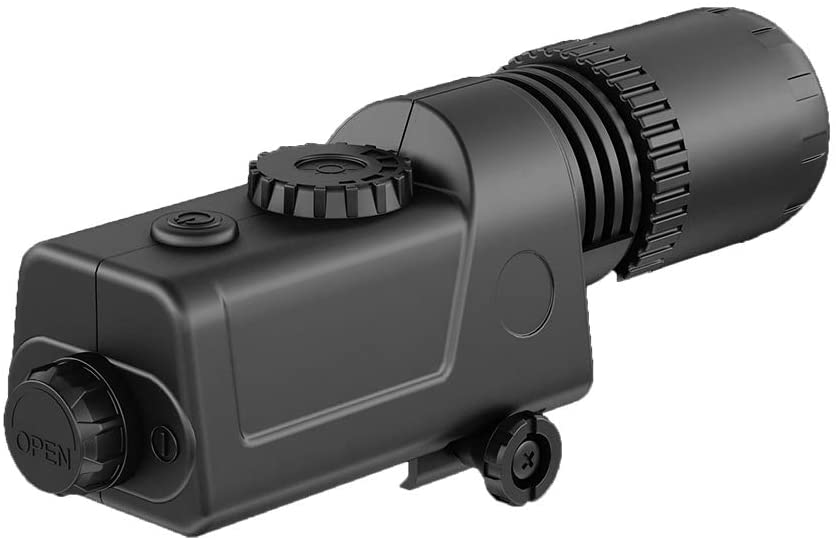
If you’re looking for a night vision device that’s completely covert then this 940nm IR illuminator may be the right choice for you. The Pulsar 940nm IR Flashlight is perfect for specific circumstances where you want to be undetected and eliminate any glow that comes with other IR illuminators.
Pulsar designed this night vision device to resist high-pressure and heavy sprays of water, with a rating of IPX6. So, you can feel comfortable hiking in the woods no matter the weather condition. It has an adjustable IR spot position and can be adjusted horizontally or vertically by turning it’s locking ring. Powered by three AA batteries, the Pulsar 940nm is equipped with an adaptable weaver mount and 1/4” socket that’s available for most modern rifle scopes and optical units.
Pros
- 6.7 oz
- Adjustable IR spot position
- IPX6 water resistance
- Undetectable IR light
Cons
- 940nm devices can’t see as far
Night Vision Infrared Illuminator Buying Guide
What to Look for When Buying an IR Illuminator
The process of looking for the right infrared illuminator for your night vision device can be just as tricky as it was finding a night vision device itself. With the factors contributing to how far you’re trying to further your device’s night vision range capability. Although top-quality night vision equipment doesn’t always benefit from the assistance of an IR illuminator, in many situations it can double the capacity of your device and allow you to see more clear, brighter images
Illumination Range

Asking how far you’ll be able to see with your night vision device is like asking who’s going to win this year’s Super Bowl. With so many different variables that contribute to the viewing capacity of your device’s night vision range such as how big the object is that you are looking for. Is it a house? Big-game animals or birds? How big the objective is can affect how well you can recognize specific details at certain distances.
Another big factor affecting your device’s night vision range is the amount of light that is available. Having some sort of ambient light source can have a major impact on how clear and bright your viewing image will be, thus allowing you to see further than without. A clear night with visible starlight or moonlight is the most ideal weather condition for your device’s optimal viewing capacity rather than a cloudy night with overcast weather.
Weather Resistance Rating
Always check for the water or weather resistance rating on night vision equipment to ensure you get the right device for the job. And in this case, make sure the IR illuminator you chose suits your intended use. An Ingress Protection (IP) rating is used to measure the resistance of your outdoor equipment against water and other debris. The higher the IP rating, the better resistance it offers.
Power Source
All IR illuminators need DC current in order to function. Some use AA batteries while other brands operate on CR123A lithium batteries. While the rest typically have rechargeable Li-Ion batteries.
If used continuously, IT illuminators powered by AA batteries can provide about 3 to 4 hours of power, depending on the energy requirement of your illuminator. CR batteries are for smaller type illuminators but can provide consistent power for an average of 3.5 hours. Both types of batteries can be easily replaceable.
The best IR illuminator with a 18650 Li-Ion rechargeable battery can last around 7 hours depending on the quality of the battery and what mode of operation it’s set on.
Infrared Wavelength

There are a couple of varying IR wavelengths, but the most common are 850nm and 940nm. Infrared wavelengths are measured in nanometers or ‘nm’, which is used to determine the wavelengths of electromagnetic radiation. Visible light can run between a 390nm to 700nm wavelength. The IR light wavelengths used in infrared illuminators for night vision device usually range between 805nm and 940nm
Although the 850nm and 940nm IR wavelengths are similar in performance, there are some distinct differences worthy of considering. With an 850nm wavelength, although infrared light is invisible to the human eye, the IR LEDs will put off a faint red glow when looking into your device’s light source.
While on the other hand, when using a 940nm wavelength, the IR light does not produce any visible glow. Making this wavelength completely invisible, ideally for circumstances where stealth is a key objective. The main downside of the 940nm is that it’s about 30-40% less effective than the 850nm wavelength and will illuminate less distance.
FAQs for Night Vision Illuminators
Do you need an IR Illuminator?
There are many circumstances where even the best Gen 3 devices would benefit from the help of an IR illuminator. In cases where you’re in a dark building or anytime moon or starlight isn’t at your convenience, like dense, wooded environments where shadows can affect your viewing quality.
Is IR light visible?
Infrared light is virtually invisible to the human eye, although night vision applications with an IR wavelength of 850nm produce a red glow when looking directly into the light source of your device.
Can animals see IR light?
Warm-blooded animals, such as mammals, or birds aren’t capable of seeing infrared light like humans. On the other hand, snakes have receptors allowing them to see infrared in the dark because of their protein channels that are activated by body heat put off by the prey they eat. Some other cold-blooded animals like some species of frog and fish can see IR light as well.
Conclusion
The top pick on our list came out to be the
Not all of these products may be the same as they each have their own unique set of qualities, features. Each is slightly different and is especially suited for varying circumstances that could come up while out on an evening hunt.